


 The idea is irresistible. Imagine owning an electric car that never needs a charging station, never depends on the grid, and simply gathers its energy from the sun. It sounds like the perfect marriage of renewable energy and clean transportation. That is why so many people ask the same question: can you drive an electric car using only solar power?
The answer is more nuanced than a simple yes or no. In theory, yes, an electric car can be driven using only solar power. In practice, however, whether that works depends on how the solar energy is collected, how much energy the car needs, where the vehicle is used, and what expectations the driver has. The reality is exciting, but it is not quite as simple as the myth.
The Myth: A Car That Runs Forever on Sunshine
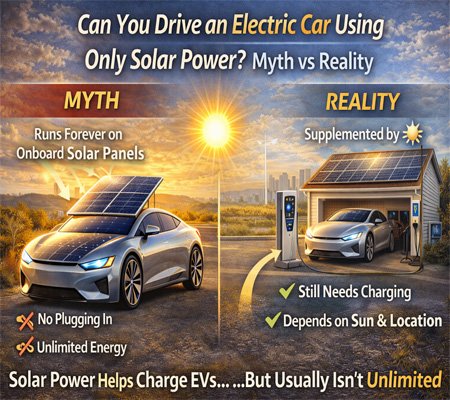
The most popular myth is that a solar-powered electric car can sit in the sun all day, charge itself completely, and then drive indefinitely without ever plugging in. It is an appealing image because it suggests total energy independence. No fuel stops. No charging stations. No utility bills. Just sunlight and motion.
This idea has become popular because solar technology feels futuristic and clean. Electric vehicles already eliminate gasoline. Adding sunlight to the story makes it sound like the final step toward perfect transportation. But while the concept contains a kernel of truth, it often overlooks the limits of real-world energy collection and vehicle demand.
The Reality: Yes, but Usually Not in the Way People Imagine
The reality is that electric cars can be powered by solar energy, but usually not only through solar panels mounted on the vehicle itself. Most of the time, solar power is used in one of two ways. The first is through a home solar system that generates electricity for EV charging. The second is through onboard solar panels that provide supplemental power rather than a full replacement for standard charging.
This distinction matters. If the question is whether the sun can provide the electricity that powers an EV, the answer is clearly yes. If the question is whether a normal electric car can rely only on a few panels mounted on its roof and never need conventional charging, the answer is usually no, at least not for most drivers and most vehicles today.
How Solar Power Can Charge an Electric Car
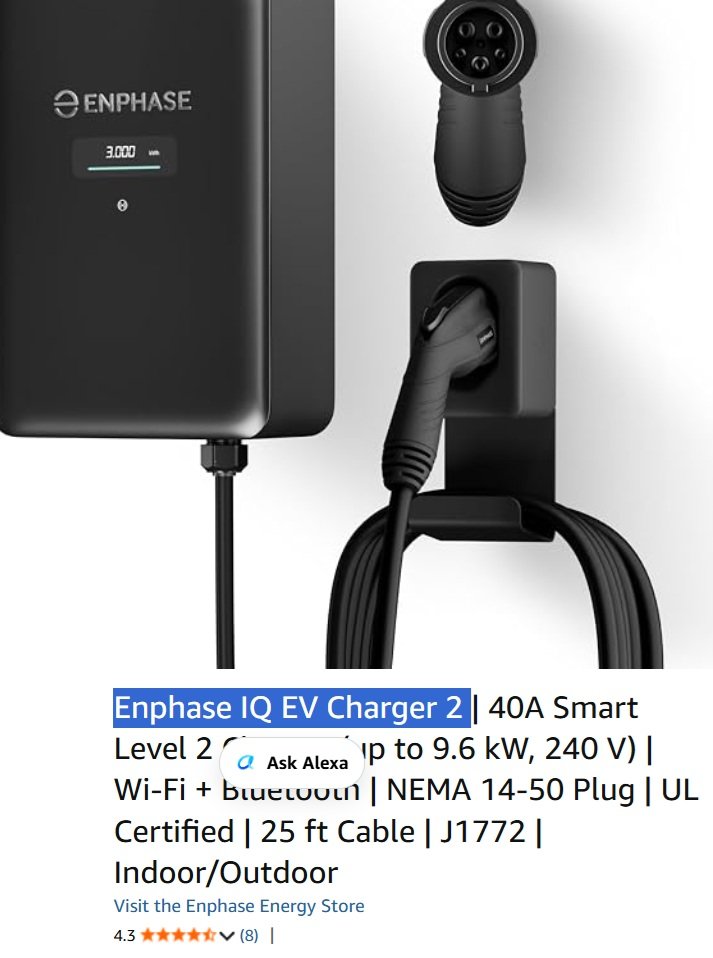
Solar panels work by converting sunlight into electricity through photovoltaic cells. That electricity can be used to charge an EV battery either directly or indirectly. In a home setup, rooftop panels collect solar energy during the day, and that electricity flows through a charging system into the vehicle. In a vehicle-mounted setup, panels on the car capture sunlight and send a smaller amount of energy into the battery or supporting systems.
The big difference is scale. A house roof offers much more surface area for solar collection than a car roof. That means a home solar system can generate far more electricity than most onboard vehicle panels ever could. This is why solar-only driving is much more realistic when the EV is charged from a home solar installation rather than relying only on integrated panels on the vehicle itself.
Why Surface Area Is the Biggest Limitation
The biggest reason solar-only EV driving is difficult with onboard panels comes down to surface area. A passenger car does not have enough room for a large solar array. Even if the panels are efficient, they can only collect so much sunlight from the hood, roof, or hatch of a vehicle.
By contrast, a home solar installation may cover a large section of a roof and collect enough electricity to support daily charging needs. This is why the dream of a fully self-charging car is still limited in most cases. The vehicle simply does not have enough built-in solar real estate to gather the same amount of energy as a fixed solar setup.
Can Some People Drive Using Only Solar Power?
Yes, some people can. A driver with a home solar system may effectively power their electric car using only solar-generated electricity, especially if their daily mileage is moderate and the solar array is large enough. In this case, the car may still plug into a charger, but the source of the electricity is the sun.
This is one of the most important distinctions in the myth-versus-reality conversation. If “using only solar power” means that all charging electricity comes from solar panels at home, then yes, many drivers can absolutely do that. If it means the car must gather all of its own energy from panels mounted on its body, that becomes far less realistic for most situations.
What Onboard Solar Panels Can Actually Do
Onboard solar panels can still be valuable. They may help extend range, reduce how often a driver needs to plug in, support ventilation or climate systems, and improve overall efficiency. In some cases, they may add enough energy each day to cover short errands or a portion of a commuter’s daily drive.
That makes them useful, but not magical. Most onboard solar systems should be viewed as supplemental technology rather than a complete replacement for charging. They can help, and in the right circumstances they can help a lot, but they usually do not eliminate the need for conventional charging entirely.
Climate and Weather Change Everything
Solar-only driving also depends heavily on location. A driver in a sunny climate has a much better chance of collecting meaningful solar energy than someone in a cloudy or rainy region. Weather, season, shade, and parking habits all affect how much energy solar panels can produce.
In places with long sunny days and strong sunlight, solar EV charging becomes much more practical. In places with frequent cloud cover or winter darkness, the solar contribution may be much smaller. This is why the same vehicle can feel very different depending on where it is used.
Driving Habits Matter Too
A person who drives short distances each day may be able to rely much more heavily on solar energy than someone who commutes long highway routes or drives constantly for work. The lower the daily energy demand, the easier it becomes for solar to keep up.
This is why solar-only EV driving is most realistic for certain use cases. A highly efficient vehicle used for short trips in a sunny region has a much better chance of functioning primarily on solar power than a larger vehicle with heavy daily energy use.
Home Solar vs Vehicle Solar: The Real Winner
If the goal is truly to drive an electric car using solar power alone, a home solar charging setup is usually the strongest and most realistic answer. A rooftop array can generate much more electricity than a car-mounted system, and it can support daily charging more consistently.
In other words, the most practical solar-powered car may not be the one with the biggest panels on its hood. It may be the ordinary EV parked next to a house with a well-designed solar roof and smart charging system. That setup offers the clean-energy benefit people want, but in a way that works better in everyday life.
Why the Myth Persists
The myth persists because it speaks to something people genuinely want. Drivers are looking for freedom from gas stations, lower energy bills, and cleaner ways to move through the world. A car that powers itself from sunlight feels like the perfect solution.
The problem is not that the dream is wrong. It is that the dream is often simplified. Solar-powered mobility is real. It just works best through a combination of technologies, systems, and realistic expectations rather than a fantasy of unlimited free energy from a few panels on a vehicle roof.
Where the Technology Is Heading
The future is promising. Solar panels are becoming more efficient, batteries are improving, and automakers are experimenting with better ways to integrate solar surfaces into vehicle design. Lightweight materials and aerodynamic engineering are also making it easier for vehicles to travel farther on less energy.
Over time, this could make solar-only or near-solar-only driving more practical for more people. The technology is moving in that direction, even if it is not fully there yet for mainstream use. What feels limited today may become far more capable in the years ahead.
So, Myth or Reality?
It is both. The idea that solar energy can power an electric car is absolutely real. The idea that most EVs can drive indefinitely using only a few onboard solar panels, with no charging support, is mostly a myth for now.
The truth sits in the middle. Solar power can play a meaningful role in electric driving today. It can fully support charging in some home-solar setups. It can supplement range through onboard systems. It can lower costs, reduce emissions, and improve energy independence. But it does not yet remove every limitation of charging for the average driver.
Final Thoughts
Can you drive an electric car using only solar power? Yes, under the right conditions, especially when the car is charged from a home solar energy system. But if the question is whether a typical electric car can rely only on a small number of built-in panels and never need traditional charging, that remains more aspiration than everyday reality.
Still, the direction is clear. Solar energy and electric vehicles belong together, and each year the connection becomes stronger. The myth may oversell what is possible today, but the reality is already impressive and moving steadily closer to the dream.
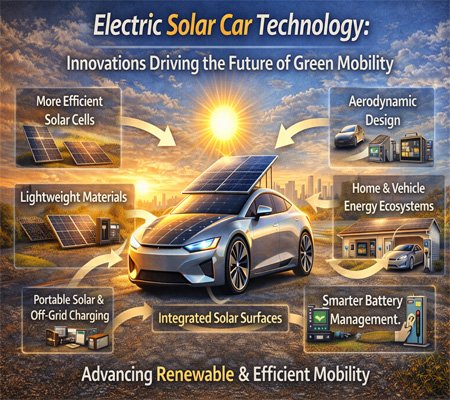 Transportation is evolving at a remarkable pace, and one of the most exciting developments is the rise of electric solar car technology. Electric vehicles have already changed the conversation around fuel, efficiency, and emissions. Now solar-powered vehicle innovation is adding a new dimension to that progress by allowing cars to capture energy directly from the sun.