


Electric Solar Car

Main Menu

  • Home
  • Electric Solar Car
  • Ravens Design Shop
  1. You are here:  
  2. Home
  3. Electric Solar Car

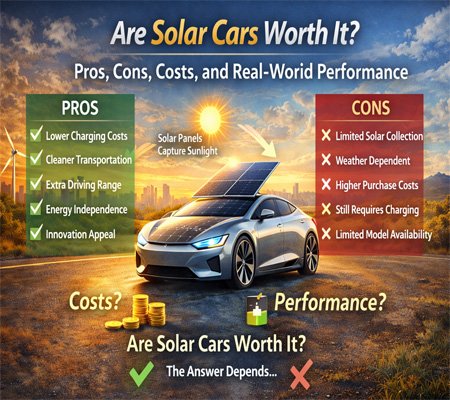
Are Solar Cars Worth It? Pros, Cons, Costs, and Real-World Performance

article4Solar cars capture attention fast. The idea of driving a vehicle powered in part by sunlight feels like the future arriving early. For many drivers, the concept is exciting because it combines two of the most powerful trends in clean transportation: electric vehicles and solar energy. But excitement alone is not enough. The real question people ask is simple: are solar cars worth it?

The answer depends on expectations, driving habits, climate, and budget. Solar-powered vehicles offer real advantages, but they also come with limitations that buyers need to understand clearly. This article explores the pros, cons, costs, and real-world performance of solar cars so readers can make a smarter decision.

What Is a Solar Car?

A solar car is typically an electric vehicle that uses solar panels to capture sunlight and convert it into electricity. That energy can help charge the battery, extend driving range, or power onboard systems. In most real-world cases, solar cars are not powered only by sunlight. Instead, they combine standard plug-in charging with solar assistance.

This distinction matters. Many people imagine a solar car as a vehicle that never needs to be plugged in. While that is an appealing idea, most current models still rely heavily on conventional electric charging. Solar technology is best understood today as a useful enhancement rather than a complete replacement for the grid.

The Biggest Advantages of Solar Cars

Lower Charging Costs Over Time

One of the strongest arguments in favor of solar cars is the potential to reduce energy costs. When a vehicle collects sunlight and turns it into electricity, the owner may need fewer plug-in charging sessions over time. Even if the solar contribution is modest, those savings can add up, especially for drivers with short daily commutes.

Cleaner Transportation

Electric vehicles already lower tailpipe emissions compared with gasoline-powered cars. Solar support makes them even more environmentally appealing by increasing the share of energy that comes from a renewable source. For drivers who want the lowest possible carbon footprint, solar-assisted vehicles are an attractive option.

Extra Driving Range

Solar panels can add usable miles to a vehicle’s battery over the course of a day. That extra range may be small compared with a full charge from a charger, but it can still be meaningful. For city drivers or commuters, even a few extra miles can reduce the frequency of plug-in charging.

Energy Independence

There is also a psychological and practical appeal to generating some of your own driving energy. Solar cars offer a sense of independence from rising utility costs and crowded charging infrastructure. That matters to people who value resilience, sustainability, and more control over how they power their vehicles.

Innovation Appeal

Solar cars represent the cutting edge of transportation design. For many buyers, owning one is not just about efficiency. It is about participating in the future of mobility. That sense of innovation can be a major part of the value for early adopters.

The Downsides Buyers Need to Understand

Limited Solar Energy Collection

The biggest challenge is simple physics. A car has limited surface area. That means it can only hold a certain number of solar panels, and those panels can only collect so much energy. Compared with a rooftop home solar system, a vehicle-mounted setup is much smaller and therefore more limited in output.

Weather Dependency

Solar performance depends on sunlight. In cloudy climates, rainy regions, shaded parking areas, or winter months, the amount of electricity collected can drop noticeably. This means solar cars tend to be more beneficial in sunnier areas and less dramatic in places with limited sunshine.

Higher Purchase Costs

Solar integration can increase the complexity and cost of a vehicle. Advanced materials, aerodynamic designs, specialized solar cells, and energy management systems may all raise the purchase price. For some consumers, the upfront premium may outweigh the long-term savings.

Not a Full Replacement for Charging

Most solar cars still need regular plug-in charging. This is perhaps the most important reality check for buyers. Solar support can improve efficiency, but in most real-world situations it does not eliminate the need for home or public charging.

Limited Model Availability

The solar car market is still young. Buyers may find fewer mainstream options than they would in the wider EV market. Some solar-focused vehicles are still in limited production, pre-order phases, or concept development.

How Much Do Solar Cars Cost?

Costs vary widely depending on the type of vehicle, the amount of solar integration, the brand, and whether the model is designed as a premium innovation vehicle or a practical commuter car. Some solar-equipped models are positioned as highly advanced technology products and carry premium pricing. Others aim to bring solar support into more accessible price ranges.

Buyers should think about cost in two ways. The first is the purchase price. The second is the total cost of ownership. A solar car may cost more upfront, but lower energy expenses and reduced charging frequency may improve long-term value. The actual payoff depends on how much solar energy the driver can realistically capture and use.

Do Solar Cars Save Money?

They can, but the savings are usually gradual rather than dramatic. A solar car is unlikely to slash costs overnight in the way marketing headlines may suggest. Instead, it may steadily reduce energy expenses over months and years, especially for drivers with short commutes and reliable access to sunlight.

The key is to match expectations to real use. Someone who drives moderate distances, parks outdoors, and lives in a sunny climate may see meaningful benefits. Someone in a cloudy area who drives long distances every day may see much smaller returns from the solar portion of the vehicle.

What Real-World Performance Looks Like

In real-world use, solar cars usually perform best as highly efficient EVs with an added renewable boost. They do not usually behave like fully self-powered machines. Instead, the solar panels work quietly in the background, adding energy during daylight hours and improving the overall efficiency of the vehicle.

For some drivers, this may translate into a few extra miles each day. For others, it may help offset auxiliary energy use, reduce battery drain, or lower weekly charging needs. The actual performance depends on driving patterns, sunlight exposure, vehicle efficiency, and seasonal conditions.

This is why solar cars tend to shine most in specific use cases. Urban commuters, daily errand drivers, and people with consistent parking in direct sunlight may benefit more than high-mileage highway drivers.

Are Solar Cars Better Than Traditional EVs?

Solar cars are not necessarily better than traditional EVs in every situation. In many cases, they should be viewed as a specialized branch of the EV market rather than a total replacement. Traditional EVs often offer broader model choices, mature infrastructure compatibility, and more predictable cost structures.

What solar cars add is an extra layer of energy efficiency and independence. For some buyers, that makes them more appealing. For others, a standard electric vehicle combined with home solar charging may deliver better overall value than a vehicle with integrated onboard solar panels.

Who Is Most Likely to Benefit?

Solar cars are often best suited for buyers who have realistic expectations and the right daily conditions. Drivers who live in sunny climates, park outside, drive moderate daily distances, and care deeply about sustainability are more likely to appreciate the benefits. Early adopters and technology enthusiasts may also find the innovation value itself worthwhile.

Businesses with eco-focused branding may also benefit. A solar-assisted fleet can create a visible sustainability story while potentially lowering operating costs over time.

When a Solar Car May Not Be Worth It

A solar car may not be worth it for someone who expects the solar panels to fully replace charging, lives in a low-sunlight environment, or is focused mainly on finding the lowest upfront vehicle price. In those cases, a conventional EV or hybrid may offer stronger value.

It may also be less appealing for drivers who do mostly long-distance travel, since solar collection is unlikely to keep up with heavy energy demand. These buyers may still prefer traditional EV technology with fast charging access and a larger, more established support network.

The Future Outlook for Solar Cars

The future for solar cars is promising, even if the present market remains limited. Solar cells are improving, battery technology is advancing, and automakers are getting better at designing lightweight, highly aerodynamic vehicles that make the most of every watt of energy. Over time, this could make solar integration more practical and more valuable for everyday transportation.

As the technology matures, buyers may see more mainstream models, lower costs, and better real-world solar performance. That means the answer to whether solar cars are worth it may become even more positive in the coming years.

Final Verdict

So, are solar cars worth it? For the right driver, yes. They offer cleaner transportation, lower charging costs over time, extra efficiency, and a powerful sense of energy independence. But they are not perfect. They still face limits in solar output, weather dependency, model selection, and upfront cost.

The smartest way to evaluate a solar car is to treat it as an electric vehicle with renewable advantages rather than a miracle machine that runs endlessly on sunlight. Buyers who understand that difference are far more likely to be satisfied with what solar mobility can truly deliver today.
Electric Solar Car Related Articles

  • Are Solar Cars Worth It? Pros, Cons, Costs, and Real-World Performance
  • Best Solar Car Kits for Electric Vehicles: Turn Your EV Into a Solar Machine
  • Can You Drive an Electric Car Using Only Solar Power? Myth vs Reality
  • Electric Solar Car Technology: Innovations Driving the Future of Green Mobility
  • Electric Solar Cars Explained: How Solar-Powered Vehicles Are Changing Transportation Forever
  • How Much Can You Save with an Electric Solar Car? Real Cost Breakdown
  • How Solar Panels Power Electric Cars: A Complete Beginner’s Guide
  • Solar Charging vs Traditional EV Charging: Which Is Better for Your Wallet?
  • The Rise of Solar EVs: Why Electric Solar Cars Are the Next Big Thing
  • Top 10 Electric Solar Cars in 2026: The Future of Sustainable Driving

How Solar Panels Power Electric Cars: A Complete Beginner’s Guide

article3Electric vehicles have already changed the way people think about transportation, but a new wave of innovation is pushing the idea even further. More drivers are asking an exciting question: can solar panels power electric cars? The answer is yes, but the way it works is often misunderstood.

Solar energy and electric vehicles are a natural match. Both aim to reduce dependence on fossil fuels, lower long-term energy costs, and create a cleaner future. For beginners, though, the technology can seem confusing. This guide explains in simple terms how solar panels power electric cars, what solar charging can realistically do, and why this technology matters.

What Does It Mean for Solar Panels to Power an Electric Car?

When people hear the phrase solar-powered electric car, they often imagine a vehicle that runs entirely on sunlight all the time. In reality, solar power usually works as a support system for an electric vehicle rather than a total replacement for standard charging.

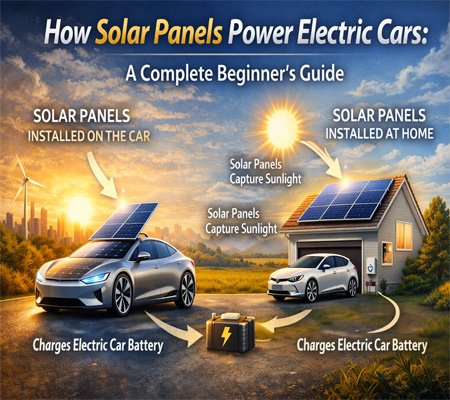
Solar panels capture energy from the sun and convert it into electricity. That electricity can then be used to charge an EV battery, either directly through panels installed on the vehicle or indirectly through a home solar power system connected to an EV charger. In both cases, the sun is helping provide the energy that moves the car.

How Solar Panels Work

Solar panels are made up of photovoltaic cells, often called PV cells. These cells absorb sunlight and convert it into electrical energy. When sunlight hits the cells, it creates an electric current. That electricity can then be stored, used immediately, or routed through a charging system.

The electricity created by solar panels is usually direct current, also known as DC electricity. Electric vehicle batteries also store DC power, which makes solar energy a natural fit for EV charging systems. Depending on the design, the energy may pass through controllers, inverters, or battery management systems before it is stored or used.

Two Main Ways Solar Energy Can Power an EV

1. Solar Panels Installed on the Car

Some vehicles are built with solar panels integrated into the roof, hood, or other exterior surfaces. These panels collect sunlight while the vehicle is parked or driving. The energy can then be used to charge the main battery or support certain onboard systems.

This approach is often called onboard solar charging. It is one of the most exciting developments in solar EV technology because it allows the car to gather energy from the environment throughout the day.

2. Solar Panels Installed at Home

A more common approach is charging an electric vehicle from a home solar energy system. In this setup, solar panels on the roof of a home generate electricity, and that energy is used to charge the EV through a home charging station.

For many drivers, this is the most practical and effective way to use solar power with an electric car. A home rooftop system has far more panel space than a vehicle, which means it can generate more electricity and support regular daily charging more easily.

Can a Car Run Only on Solar Power?

This is one of the most common beginner questions. Technically, yes, an electric car can run on solar power alone if enough energy is generated and stored. However, in real-world conditions, most solar-equipped vehicles still rely on traditional plug-in charging for much of their energy.

The reason is simple: a car has limited surface area. Even with efficient solar panels, there is only so much sunlight that can be collected from a vehicle roof or body. That means onboard solar can add useful energy, but it may not fully meet the demands of long-distance driving on its own.

For short commutes, sunny climates, and highly efficient vehicle designs, solar input can cover a meaningful portion of daily driving. For heavier use, solar usually works best as a supplement rather than the sole energy source.

How Onboard Solar Charging Helps

Even when solar panels do not fully power an EV, they still offer real benefits. Onboard solar charging can help extend driving range, reduce how often the battery needs to be plugged in, and support auxiliary systems such as ventilation or climate control.

Over time, even small amounts of solar-generated electricity can add up. A few extra miles of range each day may not sound dramatic, but for commuters and city drivers, that added efficiency can make a noticeable difference over the course of weeks and months.

Why Home Solar Charging Is So Powerful

Charging an EV with home solar is often the most practical solar solution available today. A house roof has much more room for solar panels than a car, which means it can collect significantly more energy. That makes it possible to charge an electric car using sunlight captured throughout the day.

This approach also gives homeowners more energy independence. Instead of drawing all charging power from the utility grid, a driver can use clean, renewable electricity produced at home. In some cases, homeowners can even lower their monthly power bills while supporting their transportation needs.

What Equipment Is Needed?

The exact setup depends on whether the solar panels are installed on the car or on a home. For onboard solar vehicles, the system is usually designed and built by the manufacturer. The driver does not need to install separate charging hardware on the vehicle itself.

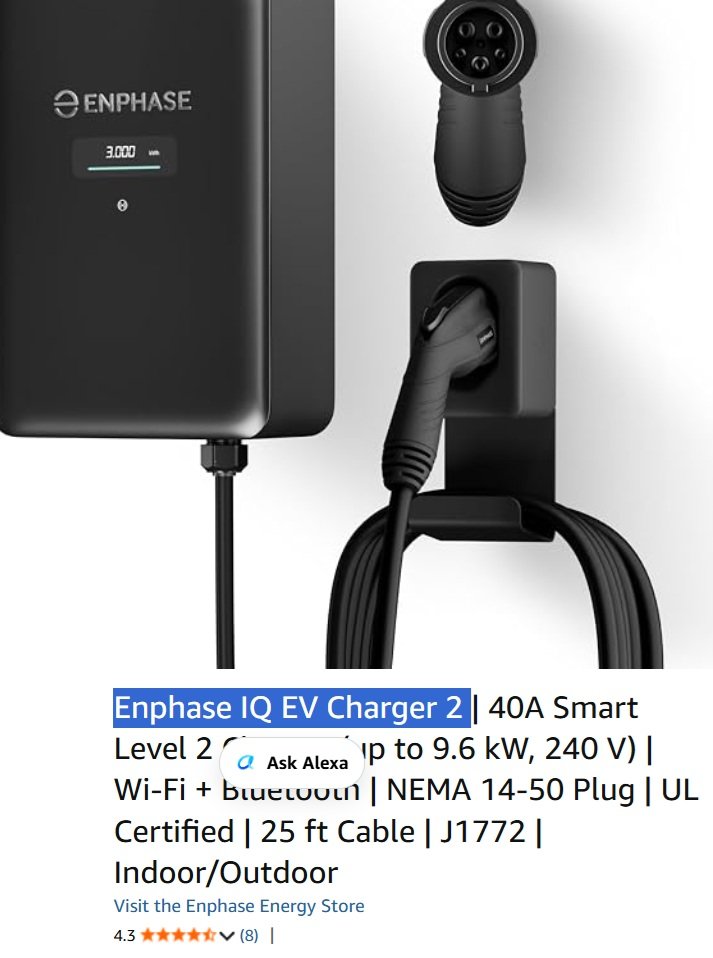
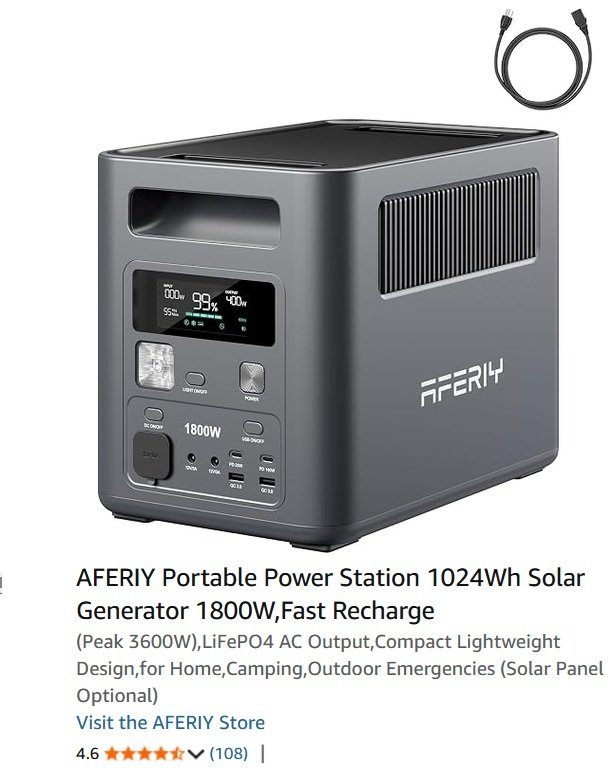
For home solar charging, the setup usually includes rooftop solar panels, a solar inverter, and an EV charging station. Some homes also use battery storage systems so solar electricity can be stored during the day and used later for nighttime vehicle charging.

What Affects Solar Charging Performance?

Not all solar charging systems perform the same way. Several factors influence how much energy can be captured and used.

Sunlight Availability

The amount of sunlight matters a great deal. Sunny regions usually produce stronger solar results than cloudy or rainy climates. Seasonal changes also affect performance, with longer summer days often providing more energy than winter conditions.

Panel Efficiency

Some solar panels convert sunlight into electricity more efficiently than others. As technology improves, newer panels are becoming better at generating usable power from the same amount of sunlight.

Vehicle Efficiency

A highly efficient electric car needs less energy per mile. That means the solar energy collected has a bigger impact on total range. Lightweight, aerodynamic vehicles often benefit the most from solar assistance.

Parking Conditions

If a solar-equipped car is parked in full sunlight during the day, it can collect much more energy than if it sits in a garage or under tree cover. Outdoor exposure plays a major role in how effective onboard solar charging can be.

The Benefits of Solar Power for Electric Cars

Lower Charging Costs

Using sunlight to generate electricity can reduce dependence on paid charging from the grid. Over time, that can lower the cost of owning and operating an electric vehicle.

Cleaner Transportation

Solar energy is renewable and produces no direct emissions during use. When paired with an electric vehicle, it creates an even cleaner transportation solution.

Energy Independence

Solar-powered charging gives drivers more control over how their vehicles are fueled. That independence can be especially valuable during changing utility prices or growing demand on public charging networks.

Future-Ready Technology

Solar-assisted EV charging places drivers at the front edge of transportation innovation. It reflects a growing movement toward smarter, more self-sustaining mobility.

The Limitations Beginners Should Understand

While solar charging is exciting, it is important to keep expectations realistic. Onboard solar panels usually do not provide enough energy to fully replace plug-in charging for most drivers. Surface area, weather conditions, and energy demand all place limits on what vehicle-mounted panels can do.

Home solar systems are often more effective, but they also require upfront investment and the right property conditions. Beginners should see solar EV charging as a way to improve efficiency and reduce costs over time rather than as a magic solution that eliminates every charging need overnight.

Who Benefits Most from Solar EV Charging?

Drivers with regular daily routines, access to sunny parking, and a strong interest in sustainability are often the best fit for solar EV charging. Homeowners with solar-ready rooftops may benefit even more because they can generate larger amounts of clean electricity for their vehicles.

Businesses can also gain value by using solar power to support fleet charging. Delivery services, local service companies, and environmentally focused brands may find that solar charging improves both operating efficiency and public image.

The Future of Solar-Powered Electric Cars

The future looks promising. Solar panels are becoming more efficient, batteries are improving, and automakers are experimenting with designs that make better use of sunlight. As vehicle technology advances, solar energy may play a larger role in extending range and supporting more of a car’s daily driving needs.

We are still early in the journey, but the direction is clear. Electric cars and solar energy belong together. One reduces tailpipe emissions, and the other provides a renewable source of power. Together, they create a transportation model that is cleaner, smarter, and increasingly practical.

Final Thoughts

Solar panels can power electric cars, but usually in a supportive role rather than as a total replacement for conventional charging. Whether installed on the vehicle itself or on a home rooftop, solar technology helps reduce energy costs, improve sustainability, and move transportation closer to a cleaner future.

For beginners, the most important takeaway is simple: solar EV charging is real, useful, and growing fast. It may not solve every energy need today, but it is already changing how people think about powering the cars of tomorrow.

Electric Solar Car Related Articles

  • Are Solar Cars Worth It? Pros, Cons, Costs, and Real-World Performance
  • Best Solar Car Kits for Electric Vehicles: Turn Your EV Into a Solar Machine
  • Can You Drive an Electric Car Using Only Solar Power? Myth vs Reality
  • Electric Solar Car Technology: Innovations Driving the Future of Green Mobility
  • Electric Solar Cars Explained: How Solar-Powered Vehicles Are Changing Transportation Forever
  • How Much Can You Save with an Electric Solar Car? Real Cost Breakdown
  • How Solar Panels Power Electric Cars: A Complete Beginner’s Guide
  • Solar Charging vs Traditional EV Charging: Which Is Better for Your Wallet?
  • The Rise of Solar EVs: Why Electric Solar Cars Are the Next Big Thing
  • Top 10 Electric Solar Cars in 2026: The Future of Sustainable Driving
  1. Top 10 Electric Solar Cars in 2026: The Future of Sustainable Driving
  2. Electric Solar Cars Explained: How Solar-Powered Vehicles Are Changing Transportation Forever

Page 4 of 5

  • 1
  • 2
  • 3
  • 4
  • 5

Policies

  • Privacy Policy
  • Terms of Service
  • Disclaimer
  • Help Desk