


 Electric solar cars capture attention because they promise something drivers want more than ever: lower operating costs and cleaner transportation. The idea is easy to understand. If a vehicle can use electricity instead of gasoline and gather some of that energy from the sun, then ownership should become more affordable over time. But how much can you really save with an electric solar car?
The answer depends on several factors, including the cost of electricity in your area, how much sunlight your vehicle or home solar system can capture, your daily driving habits, maintenance costs, and the price you pay upfront for the car. While the savings vary by driver, the financial advantages of solar-assisted electric transportation can be meaningful when viewed over months and years rather than days and weeks.
Why Electric Solar Cars Can Save Money
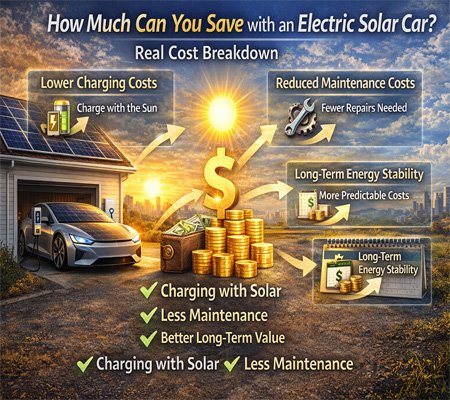
Electric solar cars save money in three main ways. First, they reduce or partially offset energy costs by replacing some paid charging with solar-generated electricity. Second, like most electric vehicles, they often cost less to maintain than gasoline-powered cars because they have fewer moving parts and no oil changes. Third, they may lower total ownership costs over time for drivers who use them efficiently and consistently.
Solar support does not mean the car runs for free. In most real-world situations, solar panels provide supplemental energy rather than fully replacing plug-in charging. Even so, every bit of energy collected from the sun can help reduce the cost per mile driven.
The First Area of Savings: Fuel and Charging Costs
The most obvious savings come from replacing gasoline with electricity. Traditional gas-powered vehicles require regular fuel purchases, and those costs can add up quickly over time. Electric vehicles usually cost less per mile to operate because electricity is often cheaper than gasoline on an energy-per-mile basis.
A solar-equipped electric car improves this further by reducing the amount of electricity that needs to be purchased from the grid. If the vehicle has onboard solar panels, those panels may add a modest amount of range each day. If the driver charges the vehicle from a home solar system, the savings can be even stronger because much more solar energy can be captured from rooftop panels.
A Simple Example of Charging Savings
Imagine a driver who covers moderate daily mileage and normally charges a standard EV using grid electricity. If solar assistance offsets even a portion of that charging, the driver may reduce monthly charging costs noticeably over time. The exact amount depends on local energy rates, driving distance, vehicle efficiency, and how much solar energy is available.
For a commuter who drives mostly short trips, even a small daily solar contribution can reduce how often the battery needs a full charge. For a homeowner charging from rooftop solar, the savings can become larger because the vehicle may draw heavily from self-generated electricity rather than utility power.
The Second Area of Savings: Maintenance Costs
Electric vehicles already have a maintenance advantage over gasoline cars, and electric solar cars share that benefit. They typically do not require oil changes, and they usually have fewer mechanical components subject to wear compared with vehicles powered by internal combustion engines.
Over time, this can lead to meaningful savings. While electric vehicles still require tire service, brake work, battery management, and standard upkeep, the absence of many traditional engine-related maintenance tasks can reduce long-term ownership expenses. For drivers comparing total cost of ownership, this lower maintenance burden is one of the strongest financial arguments for electric mobility in general.
The Third Area of Savings: Long-Term Cost Stability
Another benefit of solar-assisted electric driving is greater predictability. Gasoline prices can swing dramatically. Utility prices can rise too, but a driver who uses solar energy for charging gains some protection from those fluctuations. In other words, solar support can help stabilize a portion of transportation costs.
This matters because budgeting becomes easier when more of your driving energy comes from a system you control. A vehicle that can gather part of its energy from sunlight creates a financial buffer that becomes more valuable over time.
What Affects Your Real Savings?
Sunlight Availability
A solar car will generally save more in a sunny climate than in a region with frequent cloud cover and long winters. The more sunlight available, the more electricity the solar system can generate.
Daily Driving Distance
Drivers with short or moderate daily commutes may get more practical value from solar charging because solar energy can offset a larger share of their typical mileage. High-mileage drivers will still benefit from EV efficiency, but the solar portion may cover a smaller percentage of total energy use.
Vehicle Efficiency
A lightweight and highly efficient vehicle makes better use of every watt collected from the sun. The more efficient the car, the more impact solar assistance can have on total range and charging costs.
Type of Solar Setup
Onboard solar panels provide one level of savings, but a home rooftop solar system usually creates a much larger opportunity. A home system has more surface area and can produce more electricity, making it far more powerful for regular charging.
Electricity Rates
The higher the local utility rate, the more valuable solar charging becomes. In areas where electricity is expensive, avoiding grid charging can make a bigger financial difference.
How Upfront Cost Changes the Equation
It is important to be honest about the cost side of the equation. Solar-equipped vehicles may cost more upfront than standard EVs, depending on the model and technology included. Likewise, a home solar system requires investment before it starts producing savings.
This means the financial benefit usually builds gradually. An electric solar car may not feel dramatically cheaper in the first few months of ownership if the purchase price was high. Over time, though, lower fueling and maintenance costs can help offset that premium. Buyers should think in terms of total ownership value rather than only the sticker price.
Comparing an Electric Solar Car to a Gasoline Vehicle
Compared with a gasoline car, an electric solar car can offer savings in both fueling and maintenance. Gas cars require regular fuel stops, oil changes, and more engine-related service over time. An electric solar car replaces most of that with electricity and a simpler drivetrain.
When solar contributes part of the charging energy, the advantage grows. The result is a vehicle that may cost less to operate mile for mile, especially for drivers who can take full advantage of solar conditions.
Comparing an Electric Solar Car to a Standard EV
Compared with a regular electric vehicle, the savings from a solar-equipped EV are usually more incremental than dramatic. A standard EV is already efficient and inexpensive to operate compared with gasoline. Solar support adds another layer of savings by offsetting part of the charging cost.
In that sense, the financial comparison is often about optimization. A solar EV may not transform the economics of electric driving overnight, but it can improve them. For drivers who care about every dollar and every kilowatt-hour, that additional efficiency can be worth pursuing.
Who Is Most Likely to Save the Most?
The biggest savers are usually drivers who live in sunny areas, park outdoors, drive predictable daily routes, and either own a solar-equipped vehicle or charge from home solar panels. Homeowners with good solar exposure may see the strongest financial benefits because they can use a larger solar setup to support vehicle charging regularly.
Families with more than one electric vehicle may also benefit more because the household can spread the value of its solar energy across more transportation use.
When Savings May Be Smaller
Savings may be smaller for drivers in cloudy climates, people who park in garages or shade all day, or those who drive long highway distances that quickly outpace the energy gathered from onboard solar. In those cases, the vehicle still benefits from electric efficiency, but the solar contribution may not make a major financial difference.
Likewise, if a solar-equipped vehicle carries a steep upfront premium, it may take longer for the owner to recover that extra cost through reduced charging expenses.
The Hidden Value Beyond Direct Savings
Not all value appears as a simple dollar amount. Electric solar cars also offer indirect financial benefits through reduced exposure to volatile fuel prices, alignment with sustainability goals, and the appeal of future-ready technology. For some owners, that added value matters as much as the exact monthly savings number.
There is also the emotional benefit of knowing part of the car’s energy is coming directly from the sun. For buyers who prioritize clean transportation and long-term energy resilience, that value can feel significant even when the financial gains build slowly.
Final Cost Breakdown Perspective
So how much can you save with an electric solar car? In real terms, the savings usually come from a combination of lower charging costs, reduced maintenance, and better long-term energy stability. The exact amount varies widely, but the financial logic is solid: the more your vehicle can rely on solar-supported electricity instead of paid fuel or full-price grid charging, the more favorable the ownership picture becomes.
The best way to think about an electric solar car is not as a machine that instantly erases transportation costs, but as a vehicle that steadily improves efficiency and lowers expenses over time. For the right driver, those benefits can add up to meaningful long-term savings.
Final Thoughts
Electric solar cars offer a compelling path toward lower ownership costs and cleaner transportation, but the real savings depend on how and where they are used. Drivers with strong sunlight, efficient driving habits, and access to solar charging will usually see the most benefit. Others may still save, but at a slower pace.
What makes solar-assisted electric driving so attractive is that it combines practical savings with a smarter energy future. The more the technology improves, the stronger the financial case is likely to become.