


 The automotive world is changing fast, and few developments are as exciting as the rise of the electric solar car. Drivers today want more than just a vehicle that gets them from one place to another. They want efficiency, lower operating costs, cleaner energy, and technology that feels ready for the future. That is why solar-powered electric vehicles are drawing attention across the globe.
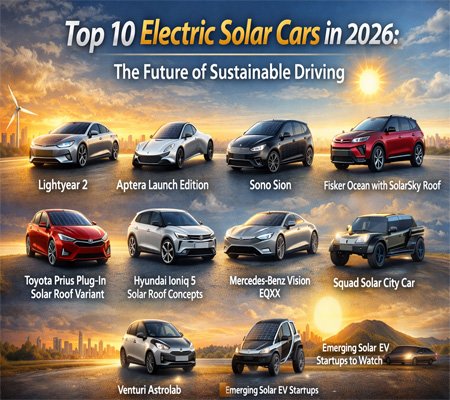
In 2026, interest in solar EVs is higher than ever. Some vehicles are designed with integrated solar panels, while others use solar technology to extend range, support onboard systems, or reduce dependence on grid charging. Although the industry is still evolving, the progress is remarkable. Below is a closer look at ten of the most talked-about electric solar cars and solar-assisted vehicles shaping the future of sustainable driving.
Why Electric Solar Cars Matter in 2026
Electric solar cars represent more than a trend. They are part of a broader movement toward cleaner, smarter transportation. Traditional electric vehicles already reduce emissions compared to gasoline-powered cars. Adding solar technology takes that idea even further by allowing vehicles to collect energy from sunlight and use it to supplement battery power.
The practical benefits are clear. Solar integration can help improve energy efficiency, reduce charging costs, and provide a small but valuable range boost over time. For eco-conscious consumers, solar vehicles also symbolize a future where transportation becomes more self-sustaining and less dependent on fossil fuels or even conventional charging stations.
1. Lightyear 2
Lightyear has become one of the most recognizable names in the electric solar vehicle conversation. The Lightyear 2 is designed to bring solar mobility closer to the mainstream by combining sleek aerodynamics with integrated solar panels. Its design philosophy centers on energy efficiency, making it one of the most closely watched vehicles in the industry.
The appeal of the Lightyear 2 lies in its promise of practical daily use. By capturing sunlight directly on the vehicle, it aims to reduce how often drivers need to plug in. For commuters with access to regular daylight, this kind of efficiency could make a noticeable difference.
2. Aptera Launch Edition
The Aptera Launch Edition stands out immediately because of its radical design. With its ultra-lightweight structure and highly aerodynamic body, Aptera has focused on maximizing every bit of energy the car uses. Solar panels are integrated into the body to help extend driving range and, in ideal conditions, power many daily miles through sunlight alone.
What makes Aptera so compelling is its efficiency-first approach. Rather than building a traditional electric car and adding solar as an afterthought, the company created a vehicle around the concept of minimal energy waste. That makes it one of the most innovative solar-assisted transportation options available in 2026.
3. Sono Sion
The Sono Sion has earned attention for taking a practical and accessible approach to solar mobility. Designed with integrated solar cells across much of the vehicle’s exterior, the Sion aims to harvest sunlight in a way that helps extend range and reduce charging frequency.
What makes the Sono Sion appealing is its everyday usability. It is not positioned only as a futuristic concept. Instead, it speaks to families, commuters, and drivers who want the benefits of solar support in a vehicle that still feels practical for real life.
4. Fisker Ocean with SolarSky Roof
The Fisker Ocean is primarily known as an electric SUV, but its available SolarSky roof has made it part of the solar EV conversation. This feature allows the vehicle to capture sunlight through its roof, generating supplemental energy that contributes to overall efficiency.
While the solar contribution may not power the entire vehicle independently, it reflects a major shift in the industry. Established EV brands are beginning to integrate solar features into mainstream vehicle categories, helping move solar assistance from niche innovation toward broader adoption.
5. Toyota Prius Plug-In Solar Roof Variant
Toyota has long been associated with efficiency and hybrid innovation, and its solar roof developments have kept it in the conversation about solar-assisted transportation. In select versions, the Prius Plug-In includes solar roof technology that helps support battery charging or onboard systems.
The Prius remains important because it bridges familiar mass-market appeal with forward-thinking energy solutions. For consumers who want a trusted brand while exploring solar vehicle benefits, Toyota’s approach offers a recognizable entry point.
6. Hyundai Ioniq 5 Solar Roof Concepts
Hyundai has explored solar roof integration within its EV ecosystem, and the Ioniq family continues to represent innovation in sustainable mobility. Solar roof concepts and related energy features show how manufacturers are testing ways to bring renewable energy directly into vehicle design.
The significance here is not just about one model. It is about the broader direction of the market. Hyundai’s work shows that major automakers view solar integration as a meaningful area of future development rather than a fringe experiment.
7. Mercedes-Benz Vision EQXX
The Mercedes-Benz Vision EQXX is a concept vehicle, but it has captured attention because it demonstrates how far efficiency engineering can go. With an emphasis on lightweight materials, aerodynamic excellence, and solar-assisted functionality, it represents the luxury segment’s vision of the future.
Even though concept cars do not always translate directly into production models, they influence the industry in powerful ways. The EQXX shows that solar energy can be part of a premium driving experience, not just an efficiency experiment.
8. Squad Solar City Car
The Squad Solar City Car is designed for short-distance urban use, making it one of the most practical examples of solar mobility for city environments. Its compact size and integrated solar panels make it especially appealing for local errands, neighborhood transportation, and dense urban settings where efficiency matters.
This type of vehicle highlights a key truth about electric solar cars: the best use case may not always be long-distance travel. In compact urban transport, solar charging can become far more relevant and effective because the daily range demands are smaller.
9. Venturi Astrolab
The Venturi Astrolab is more of a visionary project than a consumer road car, but it deserves a place on this list because it showcases the outer edge of what solar-powered vehicle engineering can achieve. Built with extreme performance and energy innovation in mind, it captures imagination and pushes the boundaries of solar transportation design.
Vehicles like this matter because innovation often starts at the edges. Experimental projects create ideas, technologies, and design breakthroughs that can later influence everyday commercial vehicles.
10. Emerging Solar EV Startups to Watch
Beyond the headline-making names, a number of startups are working on solar-assisted mobility solutions in 2026. Some focus on passenger vehicles, while others explore delivery fleets, lightweight commuter cars, and specialty vehicles designed for specific climates or commercial use.
These emerging companies matter because the solar EV sector is still young. The most important breakthroughs may come from smaller innovators willing to rethink vehicle design from the ground up. Watching this space now could reveal the brands that define the next decade of green transportation.
What Makes a Great Solar Electric Car?
Not every solar-equipped vehicle is the same. The best electric solar cars tend to share several qualities. They are lightweight, highly aerodynamic, and designed to use energy as efficiently as possible. They also integrate solar panels in ways that support real-world driving rather than simply adding solar as a cosmetic feature.
Another major factor is purpose. A solar city car may succeed by covering short urban trips efficiently, while a long-range solar commuter vehicle may focus on supplementing battery performance over the course of a workweek. The most successful designs match solar capability to actual driving needs.
Challenges Still Facing the Industry
Electric solar cars have enormous potential, but the industry is still overcoming important limitations. One challenge is the amount of energy a vehicle can realistically collect from its surface area. A car does not have the same space as a home rooftop solar system, which means solar gains must be carefully optimized.
Weather also affects performance. Cloudy regions and shaded parking can reduce solar output, while manufacturing costs remain a factor for many new solar-powered vehicle designs. These challenges do not eliminate the promise of solar EVs, but they do explain why the sector is still in a growth phase rather than full mass adoption.
The Future of Sustainable Driving
The future of sustainable driving will likely include a mix of technologies working together. Battery-electric vehicles, better charging infrastructure, smarter software, lightweight materials, and integrated solar systems will all play a role. Solar-powered cars may not replace conventional EV charging entirely, but they can make electric transportation even more efficient and resilient.
In 2026, the most exciting part of the market is not just what solar vehicles can do today. It is what they suggest about tomorrow. They point toward a world where cars do more than store energy. They actively gather it, manage it, and use it more intelligently.
Final Thoughts
The top electric solar cars of 2026 reflect a transportation industry in transition. Some are production-ready, some are experimental, and others are stepping stones toward a more advanced future. Together, they show that solar-assisted mobility is no longer just a dream. It is becoming part of the real conversation about how people will drive in the years ahead.
Whether you are a sustainability enthusiast, a technology follower, or a driver looking for smarter energy solutions, solar EVs are worth watching. The future of transportation is electric, but it is increasingly solar too.