




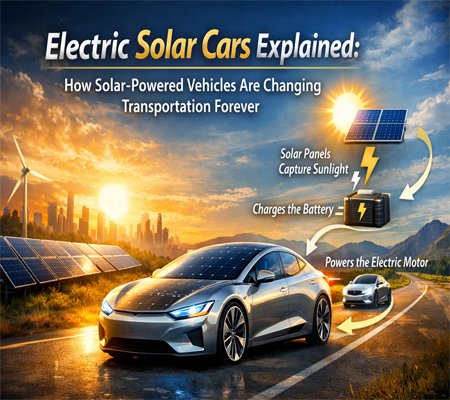
 Transportation is entering a new era. For decades, drivers relied on gasoline to power daily commutes, road trips, and commercial travel. Then electric vehicles reshaped the market by offering cleaner, quieter, and more efficient alternatives. Now, a new frontier is emerging: electric solar cars. These innovative vehicles combine electric mobility with the power of the sun, creating a vision of transportation that is smarter, greener, and more independent than ever before.
What Is an Electric Solar Car?
An electric solar car is a vehicle that uses electricity as its main power source while also incorporating solar panels to capture sunlight and convert it into usable energy. Unlike traditional gas-powered cars, solar electric vehicles do not rely on combustion engines. Unlike standard electric vehicles, they are designed to supplement battery charging with solar energy collected directly from the sun.
In simple terms, these vehicles blend two powerful technologies: electric drivetrains and solar energy systems. The result is a car that can reduce dependence on charging stations, lower energy costs over time, and move society closer to truly sustainable transportation.
How Electric Solar Cars Work
The basic concept behind an electric solar car is surprisingly easy to understand. Solar panels installed on the roof, hood, or body of the car collect sunlight throughout the day. That sunlight is converted into electricity through photovoltaic cells. The generated energy can then be used in one of two ways: it can either charge the car’s battery directly or provide supplemental power to extend the vehicle’s driving range.
Most solar-powered vehicles still rely on plug-in charging for the majority of their energy needs, especially for longer trips or cloudy conditions. However, solar charging adds valuable efficiency. Even a modest amount of solar input can help power short daily drives, keep systems running, or reduce how often a driver needs to connect to the grid.
Why Solar-Powered Vehicles Matter
Electric solar cars matter because they solve multiple problems at once. They help reduce greenhouse gas emissions, decrease reliance on fossil fuels, and create a cleaner transportation ecosystem. At the same time, they give drivers more control over how their vehicles are powered.
For many people, the appeal goes beyond environmental benefits. Solar EV technology offers a glimpse of greater energy independence. Imagine parking your car outside during the day and allowing sunlight to contribute to your next drive. That idea is powerful because it transforms an ordinary parked vehicle into an active energy collector.
As cities grow more crowded and climate concerns intensify, solar electric vehicles represent a compelling step toward mobility that is both practical and forward-thinking.
The Key Benefits of Electric Solar Cars
1. Lower Energy Costs
One of the biggest advantages of electric solar cars is the potential to reduce charging costs. While solar panels on a vehicle may not fully power every mile driven, they can provide meaningful supplemental energy. Over time, that can translate into fewer plug-in charging sessions and lower electricity bills.
2. Reduced Carbon Footprint
Standard electric vehicles already offer an environmental advantage over gasoline-powered cars, but adding solar makes them even cleaner. When more of a vehicle’s energy comes from direct sunlight, the overall carbon footprint can decrease further.
3. Greater Energy Independence
Solar EVs give drivers a sense of freedom that is difficult to ignore. Instead of depending entirely on public charging infrastructure or home electricity, drivers can capture some of their own energy from the sun. This can be especially useful in sunny climates or for short everyday trips.
4. Extended Range
Even small gains in efficiency matter. Solar panels can help extend the range of an electric vehicle by adding miles over the course of a day. For commuters who drive moderate distances, that added range may be enough to make a noticeable difference.
5. Innovation That Inspires
Electric solar cars are more than transportation tools. They symbolize progress. They inspire engineers, entrepreneurs, automakers, and consumers to think differently about what vehicles can do and how clean mobility can evolve in the years ahead.
Challenges Facing Solar Car Technology
While the future of electric solar cars is exciting, the technology still faces important challenges. One of the biggest limitations is surface area. A car simply does not have as much room for solar panels as a rooftop home installation or solar farm. That means the amount of electricity generated by onboard solar is limited.
Weather is another factor. Solar efficiency depends on sunlight, so cloudy days, shaded parking, and seasonal conditions can reduce performance. In regions with frequent rain or long winters, solar gains may be less dramatic than in sunnier environments.
Cost also remains a barrier. Advanced solar vehicle design, lightweight materials, and integrated energy systems can raise manufacturing costs. As technology improves and scales, prices may become more competitive, but adoption still depends on affordability and consumer demand.
How Electric Solar Cars Compare to Traditional EVs
Traditional EVs and electric solar cars share the same clean-driving foundation, but solar-equipped models add an extra layer of capability. A standard EV depends entirely on charging from the electrical grid or a home charger. A solar EV, by contrast, can generate at least part of its own energy during daylight hours.
That does not mean solar vehicles replace conventional charging altogether. Instead, they improve efficiency and reduce dependence. Think of solar integration as a smart advantage rather than a total replacement for charging infrastructure. In this way, electric solar cars can complement the growing EV ecosystem rather than compete against it.
Who Could Benefit Most from Solar Electric Vehicles?
Solar-powered electric cars may be especially attractive to drivers with predictable commuting patterns, access to outdoor parking, and a strong interest in sustainability. People who live in sunny regions may see the most immediate benefits, but the appeal also extends to technology enthusiasts, eco-conscious families, and drivers who want to reduce long-term fueling expenses.
Businesses may also benefit. Companies with fleets, delivery vehicles, or strong environmental branding could use solar EV technology to improve public image, lower operating costs, and demonstrate commitment to clean innovation.
The Future of Solar-Powered Transportation
The rise of electric solar cars is part of a much larger transformation in transportation. Automakers, researchers, and clean energy advocates are investing heavily in battery technology, energy efficiency, lightweight materials, and renewable integration. As solar cells become more efficient and vehicle designs become more advanced, solar input may play a larger role in everyday driving.
In the future, we may see more vehicles with solar roofs, more efficient battery systems, and smarter energy management software that maximizes every ray of sunlight. Solar trucks, delivery vans, urban commuter cars, and even specialty vehicles could become more common as the market matures.
The long-term vision is clear: vehicles that not only consume energy, but also help generate it. That shift could dramatically change how society thinks about transportation, infrastructure, and personal mobility.
Why Consumers Are Paying Attention Now
Consumers are paying attention to electric solar cars now because the timing makes sense. Fuel costs remain a concern, environmental awareness is rising, and renewable energy is no longer a fringe idea. People want cleaner solutions that also make economic sense. Solar EVs tap into both desires.
There is also a growing emotional appeal. Driving a solar-powered vehicle feels like stepping into the future. It offers more than convenience. It offers a sense of participation in a broader movement toward sustainability, innovation, and energy resilience.
Final Thoughts
Electric solar cars represent one of the most exciting developments in modern transportation. They combine the best of electric vehicle technology with the promise of renewable solar energy, creating a smarter and cleaner way to move through the world. Although the industry is still evolving, the direction is unmistakable. Solar-powered vehicles are no longer science fiction. They are becoming a real part of the conversation about how transportation should work in the future.
For drivers, businesses, and innovators alike, the message is clear: the road ahead is electric, and increasingly, it is solar too.