



Electric Solar Car

Main Menu

  • Home
  • Electric Solar Car
  • Ravens Design Shop
  1. You are here:  
  2. Home
  3. Electric Solar Car

Solar Charging vs Traditional EV Charging: Which Is Better for Your Wallet?

article6Electric vehicles are changing the way drivers think about fuel costs, maintenance, and long-term transportation savings. But once someone decides to drive electric, another important question quickly follows: how should the vehicle be charged? For many people, the choice comes down to two main options: solar charging and traditional EV charging.

Both methods can power an electric vehicle effectively, but they work differently and affect the owner’s wallet in different ways. Solar charging offers the appeal of renewable energy and long-term savings potential, while traditional charging is more established, convenient, and often easier to begin using right away. The best option depends on upfront cost, energy usage, driving habits, and long-term goals.

What Is Traditional EV Charging?

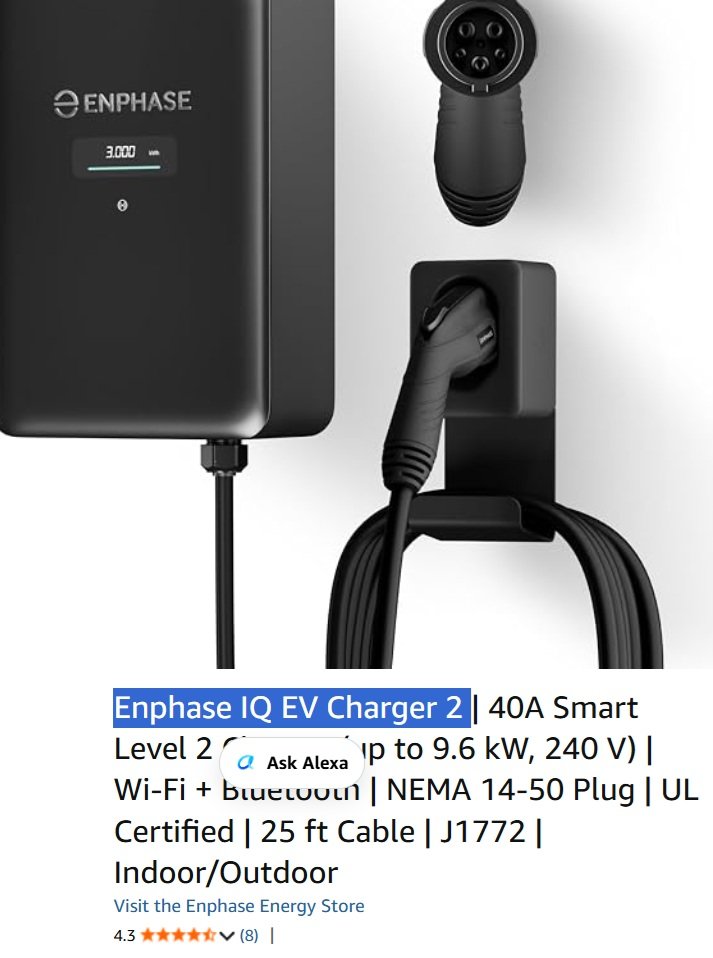
Traditional EV charging refers to charging an electric vehicle through the electrical grid. This usually happens in one of three ways: plugging into a standard home outlet, using a faster Level 2 home charger, or charging at a public charging station. In each case, the electricity ultimately comes from the local utility provider unless the home has another energy source feeding into the system.

For most EV owners today, traditional charging is the default solution. It is widely available, easy to understand, and supported by a growing infrastructure of home chargers and public networks. Drivers can usually start with minimal setup, especially if they already have access to a garage, driveway, or nearby charging station.

What Is Solar EV Charging?

Solar EV charging means using solar panels to generate electricity that charges an electric vehicle. This can happen in two main ways. The first is through a home solar energy system connected to an EV charger. The second is through solar panels integrated directly into the vehicle itself, though this is less common and usually provides only supplemental power.

In most practical situations, solar charging for EVs means rooftop solar panels on a home. Those panels collect sunlight during the day and convert it into electricity, which can then be used to charge the vehicle. This allows drivers to fuel their cars with renewable energy instead of relying entirely on grid electricity.

Upfront Cost: Which One Costs More to Start?

When comparing solar charging and traditional EV charging, the first major difference is upfront cost. Traditional charging is usually far cheaper to begin with. A driver may be able to charge from a standard outlet immediately, though this is slower. Installing a Level 2 home charger does cost money, but it is still generally much less expensive than putting in a full solar power system.

Solar charging usually requires a significant initial investment if the driver does not already have solar panels installed. A rooftop solar array, inverter, and possible battery storage system can add up quickly. That means solar charging often has a higher barrier to entry, even though it may offer lower ongoing energy costs later.

Monthly Charging Costs: Which One Is Cheaper Over Time?

This is where solar charging becomes much more attractive. Once a home solar system is installed, the cost of generating electricity can be much lower over time than continuously paying for electricity from the grid. That means each mile driven may cost less when the EV is charged from solar power rather than utility-supplied electricity.

Traditional EV charging still tends to be cheaper than gasoline, but the exact monthly cost depends on local electricity rates, charging habits, and whether the driver uses public fast chargers. Public charging can sometimes cost significantly more than home charging, especially if it is used frequently.

For drivers who own a solar-equipped home, solar charging often has the edge in long-term operating cost. For those without solar, traditional charging may remain the more affordable option in the short term simply because it avoids large installation costs.

Convenience and Ease of Use

Traditional EV charging wins on simplicity for most people. It is easier to get started, easier to understand, and already supported by a broad infrastructure. A homeowner can install a Level 2 charger and begin charging every night without needing to redesign the home’s energy system.

Solar charging is convenient after setup, but the path to getting there is more involved. The homeowner may need roof evaluations, solar design consultations, permitting, and installation. If battery storage is included, the system becomes even more complex. For some people, that extra effort is worth it. For others, traditional charging is simply easier.

Long-Term Savings Potential

If the question is purely about long-term savings, solar charging often has the stronger argument. Over several years, generating your own electricity can reduce the amount you pay to the utility company and lower the effective cost of charging your EV. For households that drive often, those savings can become meaningful.

However, the payback period matters. Solar systems usually do not save money instantly. They typically recover their cost over time through reduced utility bills and charging expenses. That means the financial benefit grows strongest for homeowners who plan to stay in the same house for years and use the system consistently.

What About Public Charging Costs?

Public charging changes the equation. Traditional home charging is usually more affordable than frequent reliance on public fast chargers. Public chargers are useful and sometimes necessary, especially for road trips, but they can add noticeably more cost than charging at home.

A driver who relies heavily on public charging may spend far more per month than someone who charges from home solar. This is one reason solar charging can become especially attractive for households trying to control transportation costs more tightly over time.

Environmental Impact and Hidden Value

Wallet concerns are important, but there is also a value difference beyond dollars alone. Solar charging allows an EV owner to use renewable energy directly, which lowers dependence on fossil-fuel-based grid electricity where the grid is not fully clean. That can reduce the overall environmental impact of driving electric.

For many people, that benefit matters financially only in an indirect sense. It may not show up as cash in hand immediately, but it increases the personal value of the investment. Drivers who care deeply about sustainability may see solar charging as a better overall return, even if the short-term math is more complex.

Who Gets the Best Financial Value from Solar Charging?

Solar charging tends to provide the best financial value for homeowners who have a good solar-ready roof, live in sunny regions, drive regularly, and plan to stay in their home for a long time. These drivers are in the best position to spread the installation cost over many years and take full advantage of long-term savings.

It also works well for households with more than one electric vehicle. The more electricity the household can offset with solar generation, the stronger the financial case can become.

Who May Be Better Off with Traditional Charging?

Traditional charging may be better for renters, people who move frequently, drivers without suitable roof space, or anyone who wants the simplest and lowest-cost way to start charging an EV at home. It is also a better fit for buyers who do not want a large upfront investment or who are not ready to commit to a home solar installation.

For many households, traditional charging is still the practical first step. It works well, requires less planning, and allows the owner to enjoy the main savings of electric driving without waiting for a longer financial payoff.

Solar Charging and Traditional Charging Can Work Together

This comparison does not always need to be treated as a strict either-or choice. Many EV owners use both. A homeowner with solar may charge from solar power most of the time but still use grid electricity at night or public chargers during trips. Likewise, someone may start with traditional charging and add solar later when it makes sense financially.

In that sense, solar charging can be seen as an upgrade path rather than a completely separate system. Traditional charging provides immediate practicality, while solar charging adds long-term efficiency and greater energy independence.

So Which Is Better for Your Wallet?

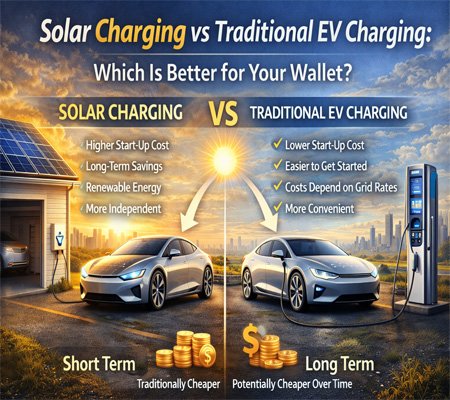
The answer depends on whether you are looking at the short term or the long term. Traditional EV charging is usually better for your wallet at the beginning because it costs less to set up and lets you start charging right away. Solar charging often becomes better for your wallet over the long run because it can reduce ongoing electricity costs and make charging cheaper over time.

If you are a homeowner with the budget for solar installation and the intention to stay put for years, solar charging may offer the best financial value. If you want the easiest, lowest-cost entry point today, traditional charging is likely the smarter move.

Final Thoughts

Solar charging and traditional EV charging both have clear strengths. Traditional charging wins on accessibility, simplicity, and lower upfront cost. Solar charging wins on long-term savings potential, renewable energy use, and a stronger sense of energy independence.

For many drivers, the smartest answer is not to choose one and reject the other forever. It is to choose the option that fits current circumstances while keeping an eye on future savings opportunities. In the end, the better choice for your wallet is the one that matches your home, driving habits, and financial horizon.
Electric Solar Car Related Articles

  • Are Solar Cars Worth It? Pros, Cons, Costs, and Real-World Performance
  • Best Solar Car Kits for Electric Vehicles: Turn Your EV Into a Solar Machine
  • Can You Drive an Electric Car Using Only Solar Power? Myth vs Reality
  • Electric Solar Car Technology: Innovations Driving the Future of Green Mobility
  • Electric Solar Cars Explained: How Solar-Powered Vehicles Are Changing Transportation Forever
  • How Much Can You Save with an Electric Solar Car? Real Cost Breakdown
  • How Solar Panels Power Electric Cars: A Complete Beginner’s Guide
  • Solar Charging vs Traditional EV Charging: Which Is Better for Your Wallet?
  • The Rise of Solar EVs: Why Electric Solar Cars Are the Next Big Thing
  • Top 10 Electric Solar Cars in 2026: The Future of Sustainable Driving

The Rise of Solar EVs: Why Electric Solar Cars Are the Next Big Thing

article5The automotive industry is in the middle of one of the biggest transformations in its history. Gas-powered vehicles are steadily giving way to cleaner alternatives, and electric vehicles have already moved from niche products to mainstream contenders. But now another idea is gaining momentum and capturing the imagination of drivers, innovators, and environmental advocates alike: solar EVs.

Electric solar cars combine battery-powered driving with the ability to collect energy from the sun. That combination is powerful because it brings together two of the most important technologies shaping the future of transportation: electric mobility and renewable energy. While the market is still developing, it is becoming increasingly clear why many people believe solar EVs could be the next big thing.

What Is a Solar EV?

A solar EV is an electric vehicle that uses solar panels to capture sunlight and convert it into electricity. That electricity can then be used to support the vehicle in different ways. In some designs, solar energy helps charge the main battery. In others, it powers certain onboard systems or adds a small but meaningful boost to driving range.

Most solar EVs still rely on conventional charging through home chargers or public charging stations. That means they are not usually powered by sunlight alone. Instead, solar integration works as an efficiency advantage that helps reduce dependence on the grid and improves the overall sustainability of the vehicle.

Why Interest in Solar EVs Is Growing Fast

Interest in solar EVs is rising because consumers are looking for transportation solutions that are cleaner, smarter, and more self-sufficient. Electric vehicles already solve many problems associated with gasoline, but they still depend on charging infrastructure and electrical supply. Solar support makes EVs even more attractive by adding a renewable energy component directly into the mobility experience.

For many people, the appeal is both practical and emotional. On a practical level, solar panels can help improve efficiency and reduce energy costs over time. On an emotional level, the idea of a vehicle that gathers its own energy from sunlight feels like a natural leap into the future. It turns a parked car into more than a machine waiting to be used. It becomes an active part of an energy ecosystem.

Solar EVs Fit the Push for Cleaner Transportation

Around the world, governments, automakers, and consumers are under pressure to reduce emissions and move toward sustainable transportation. Electric vehicles are already central to that shift, but solar EVs make the clean transportation story even stronger. When a vehicle can use energy gathered directly from the sun, its environmental appeal grows significantly.

Solar EVs reflect a broader cultural movement toward energy awareness. People do not just want electric vehicles anymore. Many want vehicles that connect more directly to renewable energy, lower their footprint, and offer a sense of independence from fossil fuels and traditional power sources.

The Technology Is Getting Better

One reason solar EVs are rising now is that the technology supporting them is improving. Solar cells are becoming more efficient, lighter, and easier to integrate into vehicle surfaces. Battery systems are also advancing, allowing cars to store and manage energy more intelligently. At the same time, automakers are learning how to build more aerodynamic vehicles that get more miles out of every unit of power.

These improvements matter because solar energy on a car is limited by surface area. The more efficient the panels and the more efficient the vehicle, the more meaningful the solar contribution becomes. This is why many of the most exciting solar EV designs focus heavily on lightweight engineering and sleek body shapes.

Energy Costs Make Solar EVs More Appealing

Rising energy awareness has made drivers more interested in any technology that can lower operating costs. Solar EVs speak directly to that concern. Even if onboard solar does not fully power a car, it can reduce how often the vehicle needs to be plugged in and help offset part of the charging demand.

Over time, these small gains can add up. For drivers with short daily commutes or regular exposure to sunlight, solar assistance may help reduce electricity costs and improve overall efficiency. In a world where people are paying more attention to long-term ownership costs, that matters.

They Offer a New Kind of Energy Independence

One of the most attractive ideas behind solar EVs is energy independence. Traditional gasoline vehicles rely on fuel stations. Conventional EVs rely on the grid or charging networks. Solar EVs still use those systems, but they also generate part of their own energy from sunlight.

That creates a sense of control that many drivers find exciting. A solar-equipped vehicle can keep gathering energy while parked outdoors, quietly contributing to the next trip. This independence may be modest today, but it points toward a future where personal transportation feels less dependent on outside supply chains and more connected to renewable self-generation.

Solar EVs Are Perfect for Innovation-Driven Buyers

Early adopters have always played an important role in transforming new technologies into mainstream realities. Solar EVs appeal strongly to innovation-driven buyers who want the newest, smartest, and most forward-looking transportation options. These consumers are often motivated by more than savings. They want to be part of a movement that changes how vehicles are designed and powered.

This innovation appeal should not be underestimated. Many of the technologies that are common today were once purchased first by enthusiasts willing to invest in the future before everyone else caught up. Solar EVs are in a similar stage, where excitement and aspiration are helping accelerate awareness and demand.

Urban Driving Makes Solar Assistance More Useful

Solar EVs may be especially valuable in urban and suburban driving environments. Many daily drivers do not need hundreds of miles of travel each day. Instead, they use their cars for commuting, school runs, errands, and local trips. In these scenarios, even modest solar gains can make a practical difference.

A vehicle that collects enough energy to offset part of a day’s short-distance driving becomes far more compelling when viewed through the lens of everyday routines. This is why many solar EV concepts focus on commuters, city drivers, and efficiency-focused users rather than only long-distance travel.

Automakers and Startups Are Paying Attention

Another reason solar EVs are being called the next big thing is that both startups and established automakers are investing in the space. Startups often bring bold designs and aggressive efficiency goals, while larger manufacturers explore solar roofs, solar-assisted charging, and integrated energy features within broader EV platforms.

When both ends of the market are moving in the same direction, it usually signals that a concept has real staying power. Startups push the envelope, while major brands bring manufacturing scale, consumer trust, and broader distribution. Together, they can move solar EV technology from experimental to mainstream.

The Challenges Are Real, but So Is the Momentum

Solar EVs are not without challenges. Surface area limits how much solar energy a car can collect. Weather affects performance. Manufacturing costs can be higher. Many solar-equipped vehicles still depend heavily on conventional charging. These limitations are real and should not be ignored.

But history shows that transformative technologies often begin with limitations. Early electric vehicles faced concerns about range, charging access, and cost, yet they continued to improve and expand. Solar EVs may follow a similar path. The combination of better materials, smarter design, and stronger market demand could steadily reduce today’s barriers.

Why Solar EVs Feel Like the Future

Part of what makes solar EVs so compelling is that they align with the image people have of future transportation. A sleek electric vehicle that quietly gathers energy from the sun feels efficient, elegant, and intelligent. It represents a shift away from wasteful energy models and toward systems that work in harmony with the environment.

This future-facing identity gives solar EVs an advantage in public imagination. People are drawn to ideas that feel both technologically advanced and environmentally responsible. Solar cars offer both, which is why they generate so much interest even before mass adoption is fully in place.

Will Solar EVs Become Mainstream?

The path to mainstream adoption will likely take time, but the signs are encouraging. As panel efficiency improves, battery systems become more advanced, and production scales up, solar EVs may become more affordable and more practical for everyday use. They may not replace traditional EVs overnight, but they could become an increasingly important segment of the clean mobility market.

In the near future, more vehicles may feature solar roofs, solar-assisted systems, and better energy management software. Over time, these features may become normal rather than exceptional. What feels innovative today could become expected tomorrow.

Final Thoughts

The rise of solar EVs is about more than adding panels to a car. It is about rethinking what a vehicle can be. Instead of simply consuming stored energy, solar-equipped electric cars can help gather, manage, and use renewable power in smarter ways. That shift makes them one of the most exciting developments in modern transportation.

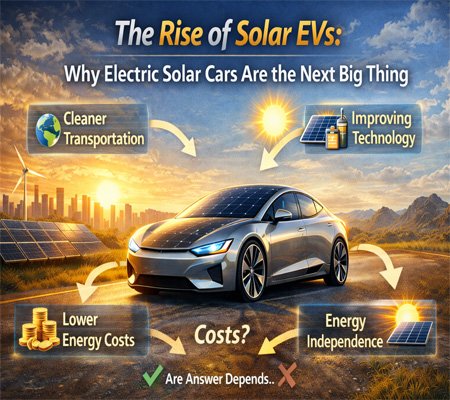
Solar EVs may still be early in their journey, but the reasons for their momentum are strong. Cleaner transportation, energy independence, improving technology, and future-focused design all point in the same direction. Electric solar cars are not just an interesting side trend. They are becoming a serious part of the conversation about what comes next.

Electric Solar Car Related Articles

  • Are Solar Cars Worth It? Pros, Cons, Costs, and Real-World Performance
  • Best Solar Car Kits for Electric Vehicles: Turn Your EV Into a Solar Machine
  • Can You Drive an Electric Car Using Only Solar Power? Myth vs Reality
  • Electric Solar Car Technology: Innovations Driving the Future of Green Mobility
  • Electric Solar Cars Explained: How Solar-Powered Vehicles Are Changing Transportation Forever
  • How Much Can You Save with an Electric Solar Car? Real Cost Breakdown
  • How Solar Panels Power Electric Cars: A Complete Beginner’s Guide
  • Solar Charging vs Traditional EV Charging: Which Is Better for Your Wallet?
  • The Rise of Solar EVs: Why Electric Solar Cars Are the Next Big Thing
  • Top 10 Electric Solar Cars in 2026: The Future of Sustainable Driving
  1. Are Solar Cars Worth It? Pros, Cons, Costs, and Real-World Performance
  2. How Solar Panels Power Electric Cars: A Complete Beginner’s Guide
  3. Top 10 Electric Solar Cars in 2026: The Future of Sustainable Driving
  4. Electric Solar Cars Explained: How Solar-Powered Vehicles Are Changing Transportation Forever

Page 3 of 5

  • 1
  • 2
  • 3
  • 4
  • 5

Policies

  • Privacy Policy
  • Terms of Service
  • Disclaimer
  • Help Desk