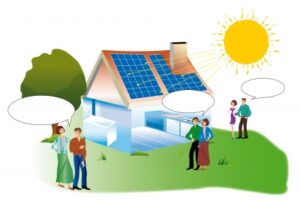
 Solar energy is a potential source of free electricity and water heating. It offers the power to enjoy electrical power in remote areas of the world. It seems to offer health and safety along with power, but does it?
If you are planning to install solar, you might want to do it soon as the tax credits for solar are being phased out over the next few years.
Solar energy health risks are seldom mentioned. That may be partially due to the limited use of this source of energy. It may also be due to the lack of research in this area. Some have begun to study solar energy health risks, however, and if one researches long enough, a few estimates are available.
Thermal Solar Energy Health Risks
Solar energy health risks are inherent to the design and installation of most thermal energy systems. These are the systems designed to heat water and air for household use.
Solar water heaters complete three basic operations before delivering hot water to your faucet or your heating unit:
1. collect sunlight and convert it into heat energy.
2. circulate fluids that transfer the heat energy to a storage unit
3. store the hot water until you need it
The solar energy health risks with such a system usually occur in the storage units. Some units allow for the growth of allergenic molds and fungi.
If proper materials are used for the storage unit, however, these solar energy systems present few, if any, health risks. Their advantages are that they are far safer than most fossil fuels or nuclear power – they have no emissions and do not pollute the air.
PV Panel Solar Energy Health Risks
The solar energy health risks associated with photovoltaic (PV) panels occurs before the panels are put into use on the consumer’s home. PV panels are the panels used to collect solar energy from sunlight and convert it into usable electricity.
The manufacture of PV panels requires the use of toxic materials. Silicon dioxide is mined from sand or quartzite and reduced with heat to pure silicon. Materials released during refining are the main health risks. Several steps in forming the photovoltaic cells utilize toxic materials. These are sprayed on the cells, and can readily be inhaled.
It is estimated that solar energy health risks associated with producing PV panels per unit energy may be between 11 and 21 deaths per quadrillion joules of energy produced.
Solar energy health risks from PV panels are very slight once the panels are produced and installed on the consumer’s home. This type of solar energy is known for reliability and low maintenance. The home owner seldom needs to be involved in any repairs, and thereby cuts solar energy health risks.
Passive Solar Energy Health Risks
Passive solar energy provides safety and health. A new building that maximizes this technology can reduce energy costs by nearly one half. How?
1. Warming indoor air in a house through vertical, slanted windows facing the sun. The windows capture maximum solar energy from the sunlight.
2. Collecting solar energy in adobe or stone walls and floors, and then releasing it into the air as the temperature falls.
3. Collecting solar energy in a sun space, much like a greenhouse built on the sunny side of the home. This heat is sent into the home with proper ventilation.
4. Holding water in black roof tanks until needed, cutting the working time of the home’s hot water heater.
5. Using clerestories – rows of windows near roof peaks that catch sunlight and bounce it through the building. The sunlight reduces the need for electric lights.
In Summary
Solar energy technologies present few, if any, health risks for the end user. Their use can reduce the health risks presented by other energy sources, providing cleaner, safer, more cost effective energy.
 Use of solar energy is becoming more and more popular every day. The price of electricity is rising and the best alternative that we have today is using solar energy. We all know that global warming is on an everyday rise today. The main reason for this being burning of fossil fuels like coal,which in turn is being used to produce electricity,so if we want our future to be safe, this is the time we step forward and start using solar technology
 Solar energy—this term basically does not cause a stirring in the mind as the explanation that comes at hand is indeed too simple. Everyone knows what is meant by solar energy, and that is, the energy that comes from the sun. In its most basic sense, solar energy and other solar home equipment are nonetheless environment-friendly and not risky at all. But then you need not become one fine environmentalist first before you will be able to come across with whatever advantageous benefit solar home energy has.
 Water runs dark, trees are dying and the air we breathe gets thicker and thinker by the moment. There are several solutions to these problems, but oddly, the source that got the whole thing going may actually be the answer to solving the poor choices made for the planet. Solar power got the entire process going and may be the solution to getting it back on track.
 Have you ever noticed homes that have huge tinted windows in them as you drive by? You may wonder why someone would want such tall windows in their home. There is a reason for that and it is because of they are using solar power to heat their homes and to provide the energy they need to power it. Any home can be built to use solar power with just a few minor alteration to make and you too can build a solar power house that will save you a lot of money in the future as you use solar power to heat your home, pump and heat your water and also to provide energy to your home to power your appliances and lights in your home naturally and effectively without a monthly bill